Triple Whale is an ecommerce analytics and attribution suite designed around online stores. Attriqs is a revenue attribution platform designed around the revenue event, wherever it happens. The honest short answer: if every dollar you earn passes through a Shopify checkout, Triple Whale is the more natural fit and has deeper ecommerce tooling. If your customers also call, book, enquire, or buy offline, Triple Whale has no mechanism to attribute those conversions and Attriqs does.
This page compares the two on the dimensions that actually change a buying decision. Competitor facts below were verified on 11 August 2026 against Triple Whale’s own public pages. Pricing and packaging change often, so confirm anything material with them directly before you decide.
Attriqs vs Triple Whale at a Glance
| Attriqs | Triple Whale | |
|---|---|---|
| Built for | Ecommerce, services, B2B, SaaS, healthcare, automotive, retail, and marketing agencies | Ecommerce brands, primarily direct-to-consumer |
| Sales platform required | None | Native support for Shopify, BigCommerce, and WooCommerce. Any other platform needs a custom API connection and a headless pixel installation |
| Multi-touch attribution | Six models, all running simultaneously and visible side by side, from the Amplify plan up. The entry Essentials plan runs one model | Multi-touch attribution on every paid plan. Compass presents seven models calibrated against MMM and incrementality tests |
| Marketing Mix Modeling | Included from the Amplify plan up, with three modelling approaches, response curves, and a 13-week forecast | Part of Compass, included standard on Enterprise and available as a paid add-on at custom pricing on Foundation and Automate |
| Incrementality testing | Not offered as in-platform geo-lift testing. Incrementality is approached through modelling | Geo-lift holdout tests run inside Compass |
| Call tracking and dynamic number insertion | Tracking numbers included from the Amplify plan up, and available as an add-on on Essentials | Not part of its published integration catalogue |
| Chat conversions | Auto-detection for 8+ live chat platforms | Not part of its published integration catalogue |
| Offline conversions | Phone, chat, and CSV import into the same attribution pipeline | Not listed among its integrations |
| Enriching ad platforms with first-party data | Not offered. The budget optimizer pushes budget changes to connected platforms | Sonar enriches first-party events and sends them server-side to platforms including Meta, Google Ads, TikTok, and Klaviyo |
| AI assistant | MosAIc™ | Moby |
| CRM on the same dataset | Attriqs CRM, currently in early access | Not offered |
| Pricing basis | Published per plan, with included seats and an extra-seat rate. Attribution and CRM are priced separately | Scales with your brand’s annual GMV, from under $250K to $350M+ |
| Published prices | See the pricing page | Free plan at $0. Foundation $219/month and Automate $749/month at the entry GMV tier. Enterprise is custom. Paid plans are 12-month subscriptions |
Does Triple Whale Work If You Are Not an Ecommerce Store?
Not without engineering work. Triple Whale natively supports three sales platforms: Shopify, BigCommerce, and WooCommerce. Those three get a backend data connection and a pixel out of the box. Everything else is treated as a “custom sales platform” and requires you to build against their API for order data and install a headless pixel yourself.
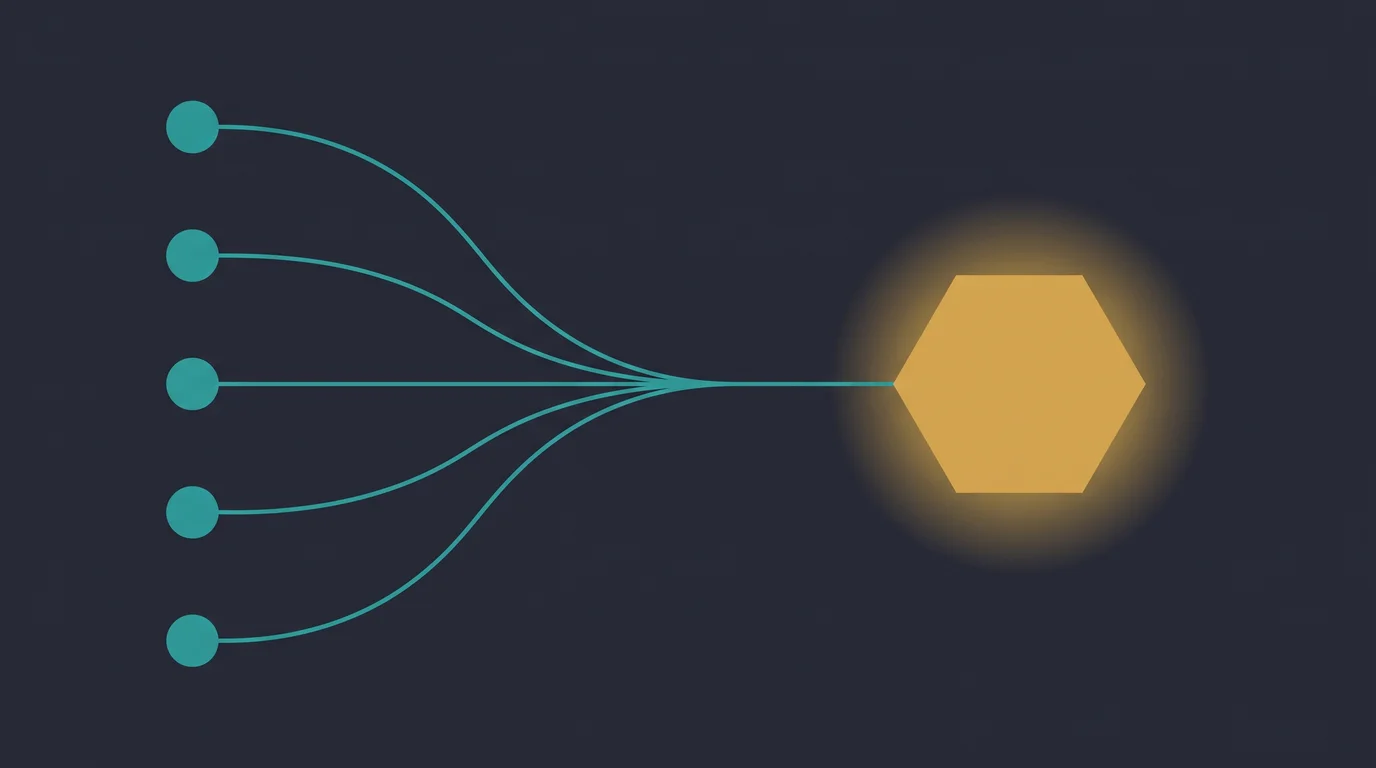
That is a reasonable design choice for a company whose customers are online stores. It is also a hard boundary. A law firm, a dental group, a car dealership, a B2B software company, or a home services business has no sales platform to connect and no checkout to instrument. Attriqs was built without that assumption: it attributes revenue from ecommerce transactions, phone calls, live chats, form submissions, and offline records imported by CSV, treating each as a conversion in the same multi-touch attribution pipeline.
How Do the Attribution Models Compare?
Both tools run multi-touch attribution rather than the single-touch model most ad platforms report. The difference is in packaging.
Attriqs runs six models simultaneously (Last Touch, First Touch, Linear, Time Decay, Position Based, and Full Path) and shows all six in one dashboard, so you can see whether a channel is genuinely weak or simply penalized by the model you happen to be using. All six run from the Amplify plan up; the entry Essentials plan runs one. Triple Whale offers multi-touch attribution on every paid plan, and its Compass layer presents seven models continuously calibrated against marketing mix modelling and incrementality tests. Compass is the more sophisticated construction of the two. It is included standard on Enterprise, and sold as a paid add-on at custom pricing on the lower tiers.
Which Tool Handles Marketing Mix Modeling and Incrementality?
This is the clearest packaging difference, and it cuts both ways.
Triple Whale’s Compass unifies attribution, marketing mix modelling, and geo-lift incrementality testing into one calibrated system that updates weekly. Attriqs does not run in-platform geo-lift holdout tests, so on incrementality testing specifically, Triple Whale does something Attriqs does not. If you need statistically defensible geo experiments inside your measurement tool, that is a genuine reason to choose them.
The counterweight is packaging. Triple Whale’s pricing page includes Compass standard only on Enterprise. A brand on Foundation or Automate can add marketing mix modelling and incrementality testing as a paid add-on at custom, contact-sales pricing, but does not get it bundled into the base price the way Enterprise customers do. Attriqs includes Marketing Mix Modeling from the Amplify plan up, with three modelling approaches, response curves that show where each channel hits diminishing returns, a 13-week revenue forecast, and a budget optimizer, at a published price with no contact-sales step. Our entry Essentials plan does not include it. So both products tier this feature, and the honest comparison is where the line falls and what it costs to cross it. If MMM is the reason you are shopping, compare what each tier actually contains, and what it costs once the add-ons are quoted, rather than what either product page shows.
Can Either Tool Track Phone Calls and Offline Conversions?
Attriqs can. Triple Whale does not appear to.
Triple Whale’s published integration catalogue covers ad platforms, email and SMS, subscriptions, reviews, fulfilment, marketplaces, and data warehouses. It does not list call tracking, dynamic number insertion, or offline conversion import. For a DTC brand this is a non-issue, because nobody phones a Shopify store to place an order. For a dealership, clinic, agency, or contractor, phone and form conversions are frequently the majority of revenue, and a tool that cannot see them is measuring the minority.
Attriqs includes call tracking with dynamic number insertion and auto-detection for 8+ live chat platforms. Calls and chats are attributed to the campaigns, keywords, and sessions that produced them, inside the same pipeline as online conversions.
Does Triple Whale Send Data Back to Ad Platforms?
Yes, and this is where Triple Whale is stronger.
Its Sonar product enriches first-party pixel events with data from connected sources and transmits them server-side back to ad platforms including Meta, Google Ads, and TikTok, plus Klaviyo. The purpose is to improve the platforms’ own targeting and event match quality, which can improve campaign performance rather than just reporting on it.
Attriqs does not do this. Attriqs measures independently and pushes budget reallocation recommendations to connected platforms, but it does not feed enriched conversion signal back into ad-platform optimization. If closing that signal loop into Meta and TikTok is your priority, Triple Whale is the better tool for that job.
How Do the AI Assistants Compare?
Both ship a conversational AI assistant, and both are included on paid plans rather than sold as an add-on.
Triple Whale’s Moby is an AI operator sized to your business, with pre-built agents (“Moby Specialists”) available on the Automate plan and above. Attriqs includes MosAIc, which answers plain-language questions against attributed revenue data (“Which channel had the best ROAS last month?”) and runs automated daily scans that surface anomalies before you open the dashboard. Neither is a reason on its own to pick a platform. The data underneath the assistant matters more than the assistant.
How Is Each Tool Priced?
Triple Whale publishes its pricing. As of 11 August 2026 there is a free plan at $0 with 10 users and a 12-month lookback, Foundation at $219 per month, and Automate at $749 per month, with Enterprise custom-quoted. Those figures are for the entry GMV tier: pricing scales with your brand’s annual gross merchandise value across tiers running from under $250K to $350M+, and all paid plans are 12-month subscriptions with unlimited users.
GMV-based pricing has a consequence worth understanding. Your measurement bill rises as your revenue rises, whether or not your marketing complexity or ad spend changed. Attriqs prices per plan with included seats and an extra-seat rate, and prices Attribution and the CRM separately. Which structure is cheaper depends entirely on your revenue and headcount, so run both against your own numbers rather than trusting a table.
Choose Triple Whale If
- You sell through Shopify, BigCommerce, or WooCommerce and essentially all revenue closes in the checkout.
- You want an ecommerce operating dashboard, not only attribution: creative reporting, subscriptions, fulfilment, reviews, and Amazon or Walmart marketplace data in one place.
- Feeding enriched first-party data back into Meta, Google, and TikTok to improve campaign performance is a priority.
- You need geo-lift incrementality testing inside the same tool, whether bundled at no extra cost on Enterprise or bought as a paid add-on at custom pricing on Foundation or Automate.
- You want to start on a free plan before committing.
Choose Attriqs If
- A meaningful share of revenue arrives by phone, chat, form, quote, or in person, and you need those conversions attributed rather than ignored.
- You are not an ecommerce store, or you are more than one: services, B2B, SaaS, healthcare, automotive, retail, or an agency measuring on behalf of clients.
- You want marketing mix modelling and budget optimization without an enterprise contract.
- You want lifetime value segmented by acquisition channel, so you can tell which channels bring customers who stay, not just customers who convert.
- You want attribution and a CRM reading from one dataset, so the channel that produced a lead is still attached to it when the deal closes. Attriqs CRM is in early access.
- You are an agency and need white-label, multi-client attribution.
Frequently Asked Questions
Is Triple Whale only for Shopify?
No, but close to it. Triple Whale natively supports Shopify, BigCommerce, and WooCommerce, which cover the large majority of ecommerce stores. Any other sales platform requires you to build a custom API connection for order data and install a headless pixel yourself, which is an engineering project rather than a setup step.
Can Attriqs replace Triple Whale for a Shopify store?
For attribution, yes. Attriqs connects to Shopify, syncs orders and revenue, and applies six multi-touch models, marketing mix modelling, and LTV cohort analysis on top. For the broader ecommerce operating surface that Triple Whale also provides, such as creative reporting, subscription analytics, and marketplace data, Attriqs is not a like-for-like replacement. Our Shopify Analytics comparison covers how the Shopify integration works in more detail.
Does Triple Whale track phone calls?
Not as far as its published material shows. Call tracking and dynamic number insertion do not appear in Triple Whale’s product pages or its published integration catalogue. If phone conversions matter to your business, you would need a separate call tracking tool and a way to join its data to your attribution.
Which tool has better incrementality measurement?
Triple Whale, if you can access it. Its Compass layer runs geo-lift holdout tests and calibrates attribution models against them and against marketing mix modelling, on a weekly cycle. Compass is included standard on Triple Whale’s Enterprise package, and purchasable as a paid add-on at custom pricing on Foundation and Automate. Attriqs approaches the same question through modelling rather than in-platform geo experiments, and makes that modelling available without an enterprise contract. The difference between reported and incremental ROAS is worth understanding before you weigh either approach.
How much does Triple Whale cost?
As of 11 August 2026, Triple Whale publishes a free plan at $0, Foundation at $219 per month, and Automate at $749 per month at its entry GMV tier, with Enterprise custom-quoted. Prices scale with your annual GMV and all paid plans are 12-month subscriptions. Check their pricing page for current figures, since GMV-tiered pricing means your quoted price may differ substantially from the entry tier.
Is Triple Whale accurate?
Triple Whale carries a 4.1 star rating across 85 reviews on the Shopify App Store as of 11 August 2026. Reviewers consistently praise the centralized dashboard, and the most common criticism concerns attribution figures diverging from platform-reported numbers. That divergence is not unique to Triple Whale. Every independent attribution tool reports different numbers than the ad platforms do, because the ad platforms count conversions they can claim, and an independent tool counts conversions it can trace. Treat any single number as one model’s opinion, which is exactly why seeing several models at once is useful.
How Attriqs Helps
Triple Whale built an excellent product for a specific customer: the DTC brand whose entire revenue story happens inside an online checkout. Attriqs starts from a different premise, that revenue arrives through many doors, and the measurement layer should not care which one a customer used. Six multi-touch models running side by side, marketing mix modelling and budget optimization without an enterprise tier, call and chat conversions attributed alongside online ones, LTV segmented by the channel that acquired the customer, and a CRM reading from the same dataset. If your revenue does not fit neatly into a checkout, that is the difference that matters.